The Story of Mbuwu Village
A community-led toilet and water project in a small village in Sulawesi
The Beginning
One and a half hours outside of Palu, Sulawesi there is a small village called Mbuwu.
When Richard, CEO of Entrust, and Jim from The Waterjars, first visited Mbuwu there were no sanitary options for the locals. Together with Henny and her husband Agus, they met Yulianus Santo, a local pastor of a church which was looking for funding for a roof and flooring. He explained the village’s sanitation problem to Richard and Jim and introduced them to the locals. They presented their urgent need to build a church and renovate their pastor’s house. Working with the locals, Richard helped them sift through their needs to find what was the most crucial.
Families had no access to toilets as they live in houses the size of a king-sized bed. With no other option they used the forest and river to relieve themselves. The government supplied water tanks for storage but there was no way of filtering the water directly to the houses. There was a basic need for better hygiene in the village and this is the one they chose. The idea for a toilet and water project was formed to provide the community with better sanitation and hygiene.
The Project
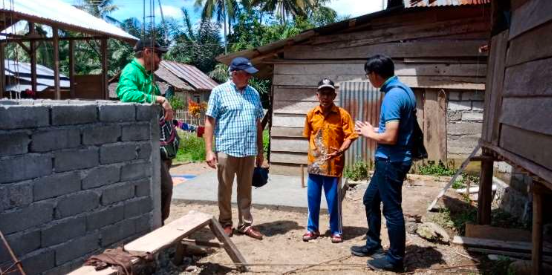
From its proposal, the project has been run as a community development mission. By empowering the villagers to build their own toilets the project encourages involvement and maintenance once the project is completed. Approaches like this limit the involvement of outsiders; to the locals this is an effort to overcome their own problem.
A committee of leaders within the village was chosen to run the construction of 40 toilets and 2 water tanks, enough for each household. Shane Wilson, an Australian living in Indonesia, joined to bring his water and sanitation experience to the project. The committee, through a treasurer, Agus, receives the money sent by Entrust, which they take to a shop that supplies the community with access to the raw materials. This way the committee receives the raw materials and can unite the village to build the toilets themselves.
What started as a community development project also became a spiritual development opportunity. Originally the Christians in the village were unsure of how this project should extend to non-Christians, who are the majority of the population. By putting Jesus’ words into practice, the locals realised what it means to love God and to love their neighbours by practical means. Other non-Christians are also their ‘neighbours’, ‘brothers and sisters’. They can come together and share their stories of life and faith.
The process has not been smooth, as different challenges have come forward at every stage. The proposal submitted to Entrust had to have many revisions before the deadlines. The community also had to be helped to understand why sanitation was more urgent than building a church. Results have not been instant since the first visit and everyone has had to learn to be patient while the project comes together.
In spite of the challenges, the committee has not lost their passion in their call to lead their community. The process has proven that basic needs like hygiene must be met for people to receive the Gospel. By cleansing and purifying the villagers’ physical needs, the experience has allowed their faith in God to quench the need in their hearts.
When the Earthquake Came
On 28 September 2018, a triple disaster struck Palu, Donggala, and the surrounding area, including Mbuwu. An earthquake, followed by a tsunami and soil liquefaction, caused widespread destruction across the region. Thousands of people were killed, homes were destroyed, and many families were left living in narrow government-provided temporary shelters (huntara) as they waited for permanent housing to be built.
The Mbuwu project, which had been planned to begin its second phase in October 2018, was put on hold. According to Henny’s progress report, there were two reasons for the delay: the earthquake had made conditions on the ground unstable. The soil remained unsettled, small aftershocks continued, and the cost and availability of building materials became a problem. The team decided to pause and wait until conditions were stable enough to resume safely. Construction restarted in February 2019.
In the broader Palu area, Entrust also supported earthquake victims directly. Recipients of Entrust’s aid received basic food supplies, gas stoves, construction materials, and capital support to help them recover and rebuild their livelihoods.
The Project Continues
When construction resumed in February 2019, the team faced additional challenges. The goal for phase two was to build 17 toilets, but the funds received were sufficient for 11. Some villagers who had already completed their own toilets were reluctant to help those still waiting, which slowed progress. The team also depended heavily on one skilled builder when he was away from the village for other work, construction would stop.
A further setback came when Ev. Yulianus Santo, the project manager who had led the committee from the beginning, was transferred away from Mbuwu by the central church. This created uncertainty about how the project would move forward. When the Entrust team from Melbourne, Richard, Mike, and Jim, visited Mbuwu in July 2019, they helped the community find a solution. The three recipient groups came together and elected a new project manager, Bp. Yohanes, who formed a small team to carry the project to completion.
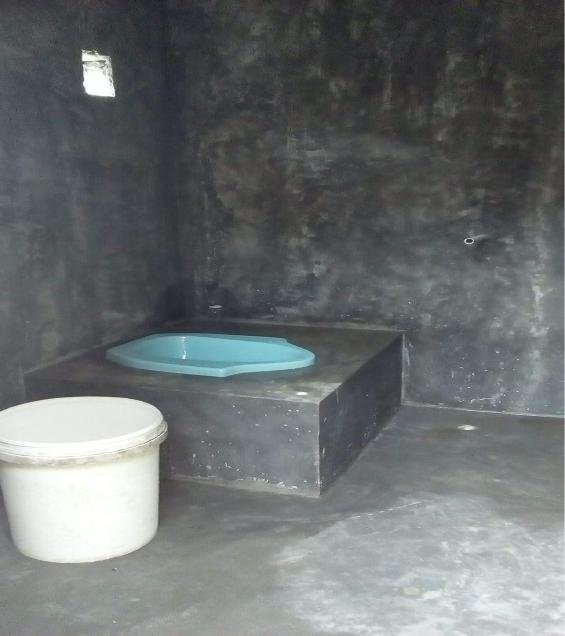
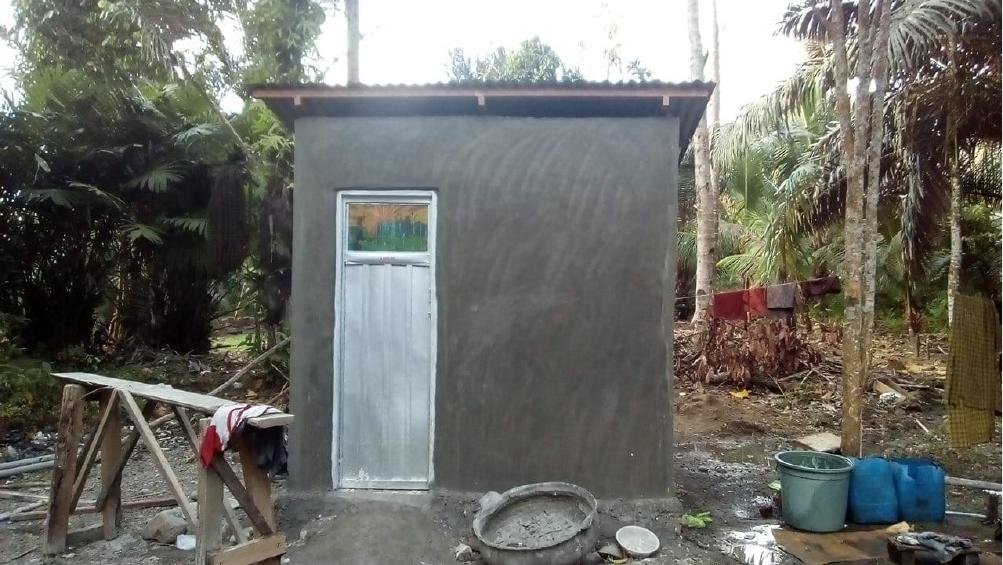
By the time of the July 2019 report, 6 toilets in phase two had been completed and 5 more were nearing completion. The plan for the following six months was to finish the remaining toilets for groups two and three, and to build the 2 water tanks as originally agreed.
The Result
By mid-2020, Henny reported the final outcomes. Across all phases of the project, 37 toilets had been built, giving 37 households in Mbuwu access to a toilet for the first time. The total project budget was AUD $19,720. Henny also noted plans to hold hygiene education sessions teaching handwashing and toilet care as a next step for the community.
| Outcome | Result |
|---|---|
| Households with access to a toilet | 37 families |
| Toilets built (total) | 37 |
| Total project budget | AUD $19,720 |